
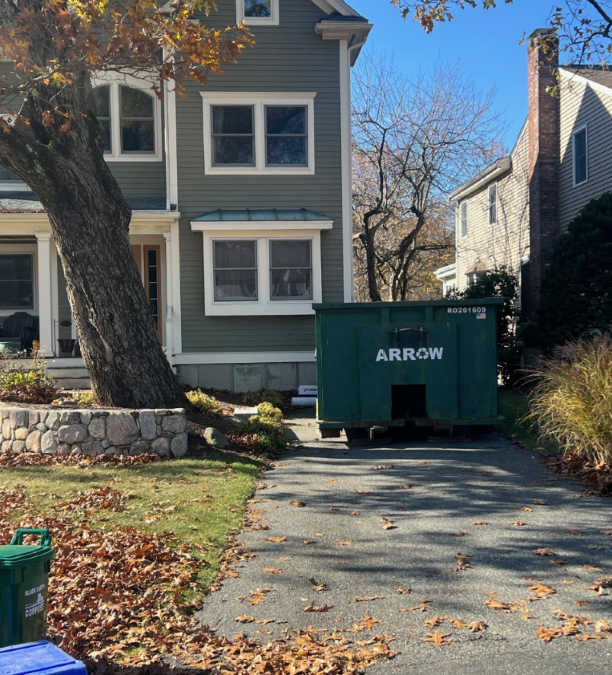
Estate cleanouts are one of the more emotionally demanding projects a family takes on. You’re often working through decades of accumulated belongings under time pressure — a house that needs to be listed, a lease that needs to end, or a family trying to coordinate across multiple schedules. Having the right logistics in place makes a hard job easier.
A dumpster rental is almost always part of the equation. Here’s what to expect when you add one to your cleanout plan.
How Much Volume Are You Actually Dealing With?
The average estate cleanout generates more debris than most families anticipate. A lifetime of household goods, furniture, clothing, tools, and general accumulation adds up fast once you start pulling it out of closets, attics, and garages.
For a typical single-family home in southern New Hampshire, most estate cleanouts land in the 20-yard range. Smaller homes or situations where a significant amount has already been donated or distributed may work with a 15. Larger properties, homes with full basements and attics, or situations where very little has been sorted in advance can push toward a 30.
If you’re not sure, err on the side of more capacity. The cost difference between container sizes is modest compared to the hassle of running out of room halfway through the job.
Plan for Multiple Passes Through the House
Estate cleanouts rarely happen in a single sweep. Families typically work in phases — sorting what gets kept, what gets donated, and what gets thrown away and the dumpster fills as decisions get made.
That means you want the container on-site for the duration of the cleanout, not just a single day. When you call to rent, let us know your expected timeline so we can set the rental period accordingly.
Most estate cleanouts run anywhere from a long weekend to a couple of weeks depending on the size of the home and how many people are involved.
What Can and Can’t Go In
Most household contents from an estate cleanout can go in a standard roll-off dumpster. Furniture, clothing, kitchenware, books, rugs, bedding, general household goods — all fine.
A few things require separate handling:
- Appliances with refrigerants (refrigerators, freezers, window AC units) need refrigerant recovery before disposal
- Electronics including TVs, computers, and monitors cannot go to landfill under Massachusetts and New Hampshire solid waste rules
- Hazardous materials like old paint, solvents, pesticides, and automotive fluids need to go through a household hazardous waste program
- Propane tanks of any size cannot go in the dumpster
If the home has been sitting for a while, keep an eye out for old chemicals in the garage or basement — these are common in older New Hampshire properties and need to be handled separately.
Coordinate Donation Pickups Before the Dumpster Arrives
If you plan to donate furniture, clothing, or household items, schedule those pickups before the dumpster shows up. Once a container is on-site it’s easy to start loading everything, and items that could have gone to a good home end up in the roll-off by default.
Organizations like Habitat for Humanity ReStores, local thrift shops, and furniture donation programs often do free pickup for larger items. Getting those appointments on the calendar first gives you a cleaner process.
We Understand What This Kind of Job Is Like
We’ve helped families throughout southern New Hampshire manage estate cleanouts for over 30 years. If you need a container, a straightforward conversation about sizing, or just a reliable company that shows up when it says it will, we’re here.
Arrow Container Services delivers to Pelham, Windham, Salem, Nashua, Hudson, Londonderry, Derry, Manchester, and Bedford in New Hampshire, and Methuen, Lawrence, Andover, Tewksbury, Chelmsford, Dracut, Lowell, and Westford in Massachusetts.
Call 603-635-4555 or request a quote online.


